The study of light, color, and spectra connects to stories from many disciplines, from history, art, science, and culture.
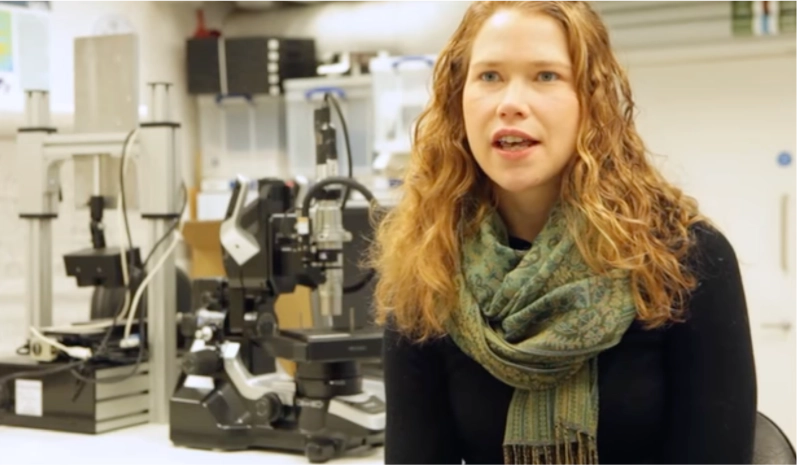
Keats Webb: Conservation Science Imaging
Smithsonian Imaging Scientist, Dr. Keats Webb, demonstrates some of the different imaging techniques that she uses at the Smithsonian Museum Conservation Institute, and describes how imaging is a necessary first step for understanding the history of - and the conservation of - Smithsonian objects.
Running time: 6:52
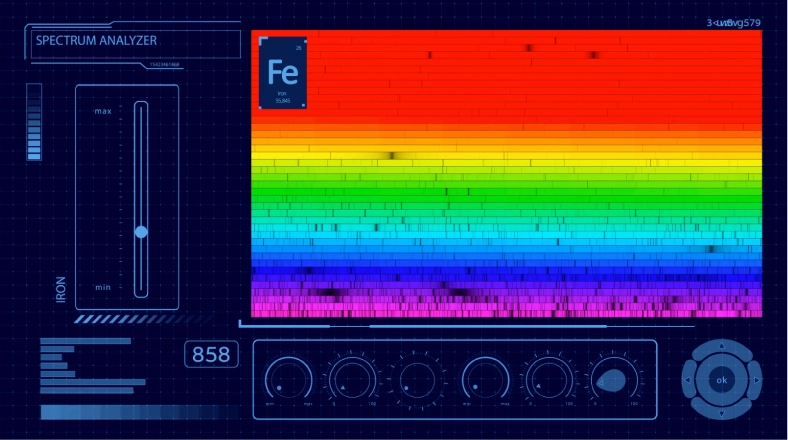
Matthew Clarke: Identifying Pigments
At the National Museum of Asian Art, Conservation Scientist Dr. Matthew Clarke is studying the 13th century Japanese scroll, "The Miraculous Interventions of Jizō Bosatsu." To learn more about the history of the scroll, Dr. Clarke imaged the object with shortwave infrared reflectance spectroscopy. In this video, he demonstrates the process with a sample chart of pigments, then matches the spectra of the different pigments to areas in the paper scroll where the pigments were applied. In this way, he locates places that may have faded or where the object was over-painted with new pigments in later efforts to repair the scroll.
Running time: 7:35
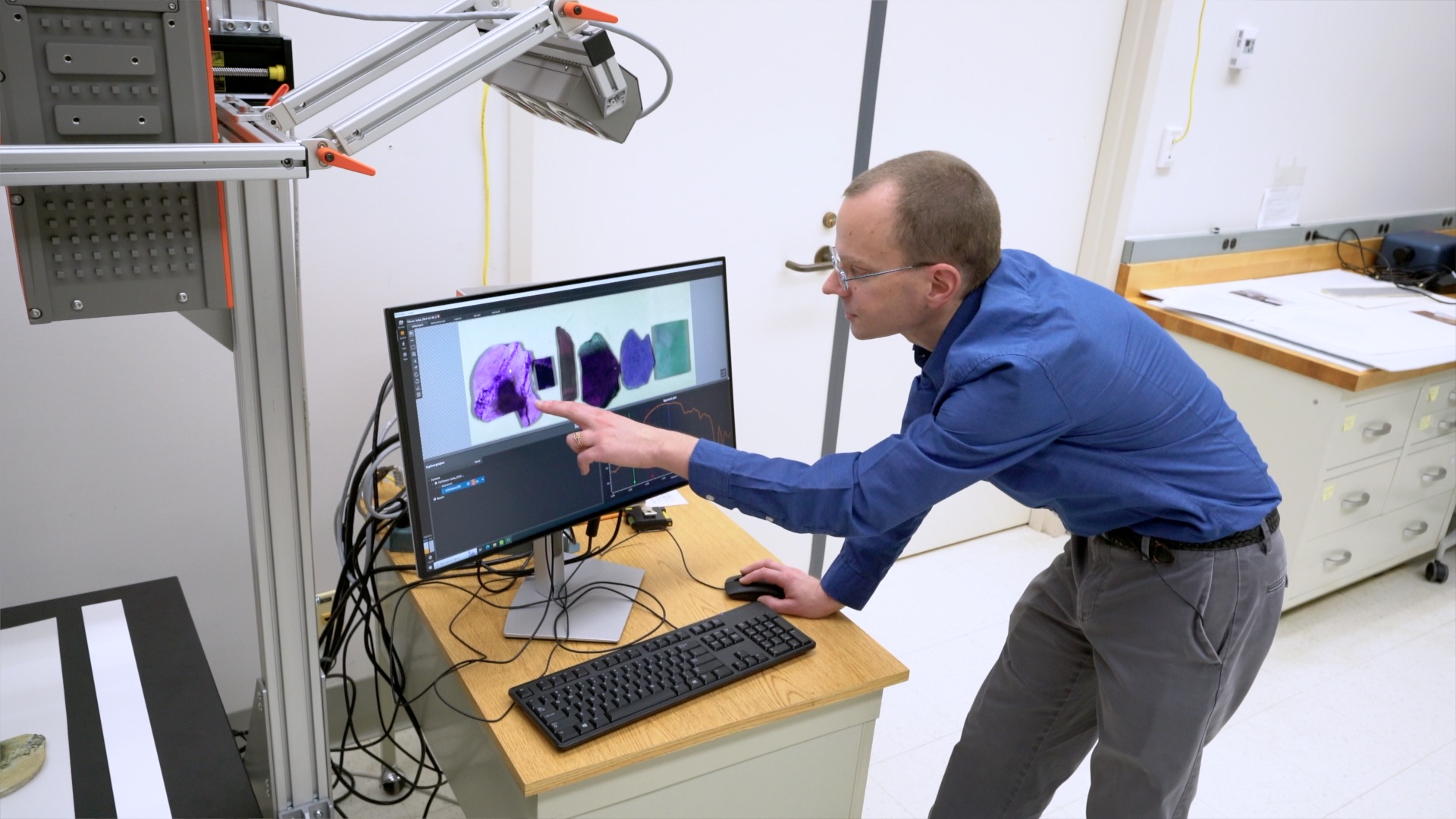
Matthew Clarke: Identifying Jades
The Smithsonian’s National Museum of Asian Art has a renowned collection, including thousands of Chinese jades. However, the term "jade" is applied to many different minerals. To assist with their conservation and preservation, it's important to know the mineral composition of each object. Dr. Matthew Clarke demonstrates the non-invasive technique of shortwave infrared reflectance spectroscopy as he quickly differentiates the mineral composition of a set of samples.
Running time: 3:43
Mercedes López-Morales: Search for Earth-like Exoplanets
Astrophysicist Dr. Mercedes López-Morales at the Smithsonian Astrophysical Observatory is a specialist in studying the atmospheres of exoplanets. To try to answer the question "Are we alone?", she describes the progress that has been made so far to identify and categorize planets using the transiting method - as well as the challenges ahead to identify an exoplanet that may have life outside our solar system.
Running time: 5:29
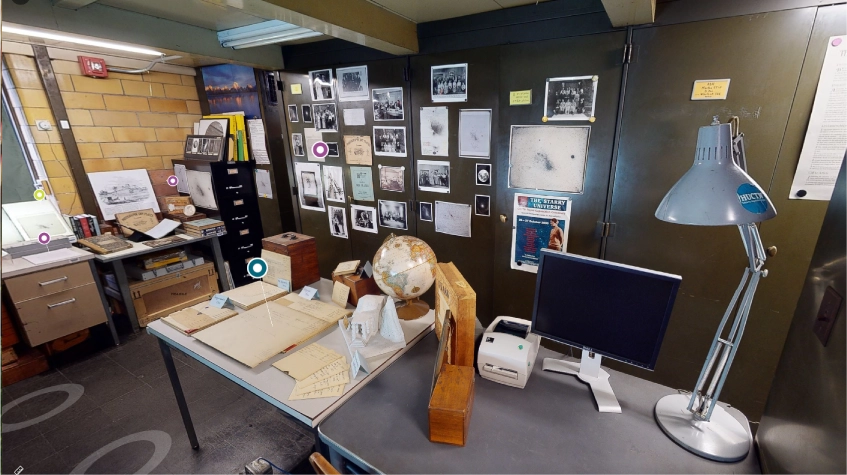
Harvard Plate Stacks: 3D Virtual Tour
The Harvard College Observatory's Astronomical Photographic Glass Plate Collection (Plate Stacks) is the largest collection of its kind in the world. The core of the collection is over 550,000 glass plate negatives and spectral images, covering both the northern and southern hemispheres. Hundreds of women studied and curated the Harvard Plate Stacks while making discoveries of their own, but more often than not their work went unrecognized.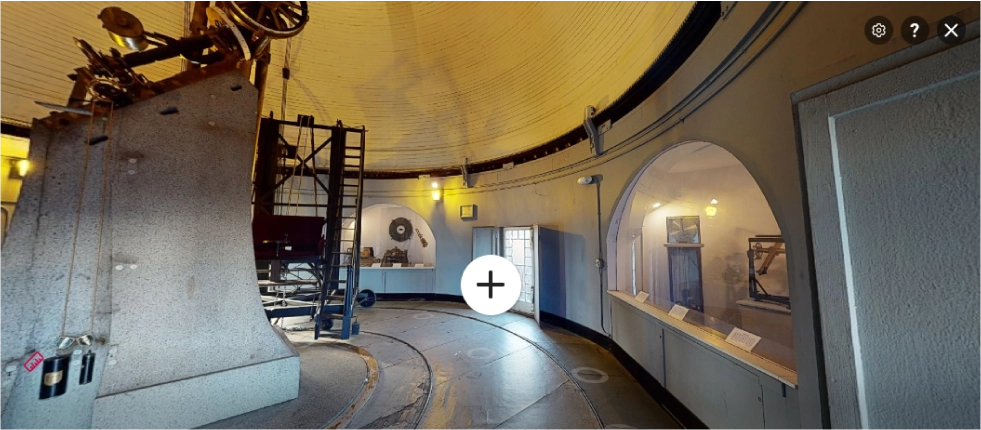
The Great Refractor: 3D Virtual Tour
This 15-inch telescope was installed in Cambridge, Massachusetts in 1847. Named the "Great Refractor," it was the largest and most significant telescope in the United States for 20 years, spurring the development of the Harvard College Observatory. Housed in the Sears Tower, which is the oldest building of the complex at the Center for Astrophysics, the Great Refractor was used to discover the eighth satellite of Saturn in 1848, and it was used by J.A. Whipple to take the first daguerreotype of a star.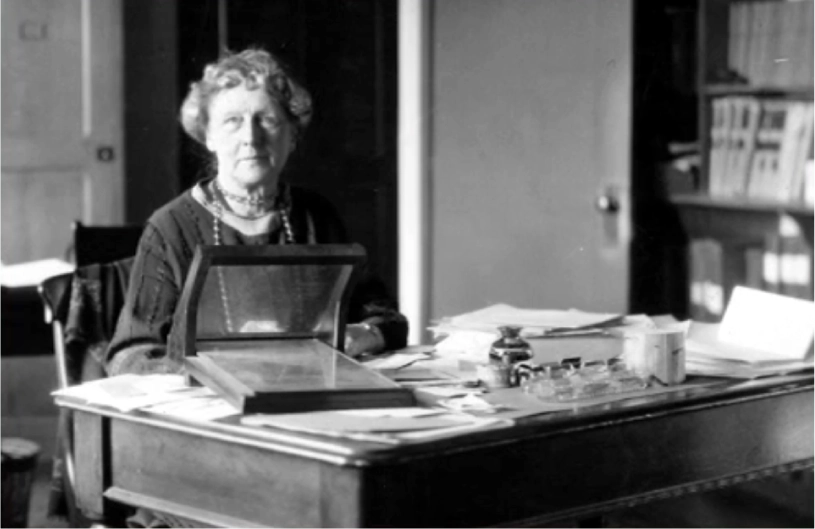
Thom Burns: Annie Jump Cannon
Annie Jump Cannon (1863-1941) was a pioneering woman astronomer who classified over 40,000 stars using their brightness and spectral types. Thom Burns is the Curator of the Harvard Glass Plate Collection at the Center for Astrophysics Harvard-Smithsonian. He describes how Cannon, one of the famous "Harvard Computers," studied the plates in the collection and how her work advanced the dream of Henry and Mary Ann Draper to use stellar spectra to understand the lifecycle of stars.
Running time: 5:06